What does the farm vet do?
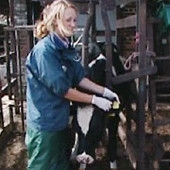
Farm vets work with large animals like cows, horses, sheep and pigs. They do not usually deal with small animals or household pets. Large-animal vets spend their time travelling from farm to farm, seeing to sick livestock, checking for disease and giving advice to farmers.
Stopping sickness
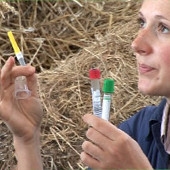
Much of a farm vet’s work is to make sure animals don’t get sick in the first place. One way to do this is by vaccination, which involves injecting the animal to protect it. Vets are always on the lookout for serious or new animal diseases such as foot-and-mouth.
Ready for emergencies
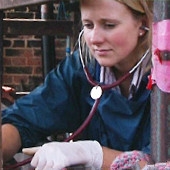
Farm vets also perform surgery on sick animals and they help cows, sheep and horses to give birth when there are problems. Sometimes a farmer will call a farm vet in the middle of the night to help with the delivery of a calf or foal!
Click on the facts
▸ Farm vet facts
- Vets must spend at least six years studying at veterinary college
- Vets need to know loads about animals, treatments and medicines
- Vets are sometimes injured after being kicked by a cow or horse
- Most farm vets now carry laptops. Special software helps them to check on the health of the animals
- Vets often get very mucky, especially when checking a calf inside a cow
▸ Farm animal facts
- Cows have four stomachs
- Beef cattle are raised for meat
- A female pig sometimes gives birth to as many as 14 piglets
- A newborn lamb weighs about the same as a newborn human baby
- Dairy cows can each produce up to 90 pints of milk a day – that’s about 6 bucketfuls!
- A newborn foal (baby horse) can stand up within an hour of being born!
- There are around 2,650,000 ewes in Scotland and nearly 460,000 breeding beef cows.
▸ Farm vet jobs
- Checking the health of animals
- Advising farmers on feeding livestock
- Controlling animal diseases
- Disinfecting farms
- Carrying out operations
- Taking blood samples and testing them in a laboratory
- Cattle foot trimming
- Vaccinating herds
- Carrying out paperwork to keep track of the jobs they do
